Hydrocele
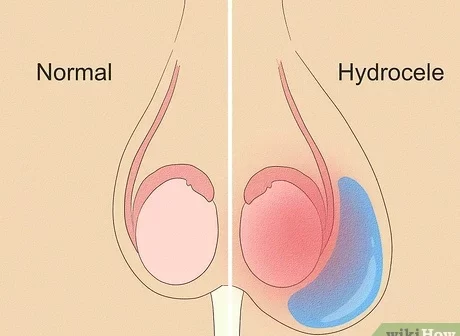
A hydrocele is when fluid fills a male’s scrotum, causing it to swell. It is not a major health issue but it can be embarrassing and uncomfortable. Hydroceles are more common in male infants than adults, and there are treatments to solve the problem.
What causes a hydrocele?
Hydroceles can occur at any age, yet tend to be more common in newborns. While they can occur without any underlying causes, an underlying injury or even inflammation can also contribute to their development. For most people, hydroceles are nothing more than an inconvenient — yet temporary — condition.
- In infants
A child’s testicles descend from their abdomen into the scrotum towards the end of pregnancy. The scrotum is the sac of skin that holds the testicles once they descend.
During development, each testicle has a naturally occurring sac around it that contains fluid. Normally, this sac closes itself and the body absorbs the fluid inside during the baby’s first year. However, this doesn’t happen for babies with a hydrocele. Babies born prematurely are at a higher risk for developing hydrocele.
- In adults
Hydroceles can also form later in life, mostly in men over 40. They can occur from a hernia but this is less common. Most of the time it is either from inflammation or from the sac (called the tunica vaginalis) not reabsorbing fluid properly. The epithelial cells in the sac produce and reabsorb the fluid constantly and there can be dysfunction with these cells leading to excess fluid.
Hydroceles can also be caused by inflammation or injury in the scrotum or along the channel. The inflammation may be caused by an infection (epididymitis) or another condition.
What are the symptoms of a hydrocele?
Hydroceles usually don’t cause any pain. Usually, the most common symptom is a swollen scrotum. However, depending on the severity of the swelling, pain or discomfort may also occur.
How is a hydrocele diagnosed? What tests are done?
A healthcare provider can diagnose a hydrocele in a child or adult through a combination of tests and observations, including:
- Physical exam – This may include testing to see how the bulge in the groin area changes under pressure or when the patient is asked to cough and/or shining a light through the scrotum, highlighting any collection of fluid in that area.
- An imaging test such as an ultrasound.
How is a hydrocele treated? What medicines may help?
- There are no medications available to treat a hydrocele.
- A hydrocele typically goes away on its own. If the hydrocele does not resolve on its own, then it needs to be surgically repaired to prevent further complications.
Surgery
Surgery to remove a hydrocele is performed under anesthesia. In most cases, you’ll be able to go home within a few hours of the surgery. A small cut is made in the scrotum or abdomen (depending on the location of the hydrocele) and the hydrocele is surgically drained and eversion of sac is done most commonly.